NVIDIA-powered AI robots will sort online retail returns in Europe
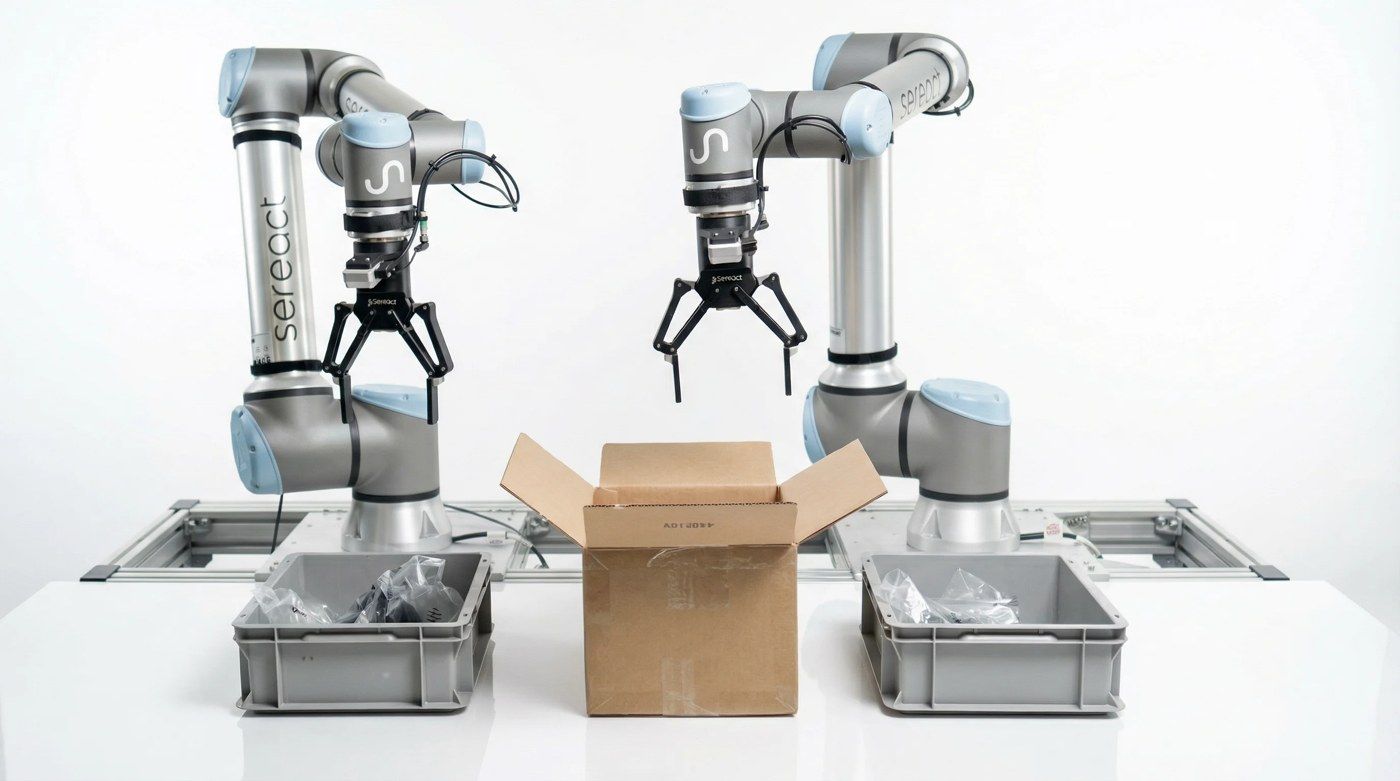
Hamburg, Germany — Retail group Otto Group and robotics company Sereact announced on Wednesday a two-phase plan for AI-controlled robots to inspect and sort customer returns, one of the most complex manual tasks in online retail.
In the first phase, ten dual-arm systems will be installed at Otto Group's logistics center in Poland. In the second, depending on initial results, 15 more arms will be added, for a total of 25. The robots run on Cortex, Sereact's Physical AI model, which can recognize and handle items it has never seen before, with no fixed product catalog and no item-specific training.
That ability is key because returns come back folded, crumpled or repackaged, and a retailer's assortment never stops changing. Cortex is trained and validated with NVIDIA's platform — Isaac Sim, Isaac Lab and Cosmos world models — which turns each real grasp into thousands of simulated variants, and it is updated on Blackwell graphics cards: when a robot struggles with an item, the fix can arrive as a tested update in days, not weeks.
The work will be done under a Robotics-as-a-Service model: Sereact operates and maintains the systems, while employees move away from repetitive grasping and lifting toward supervision, exception handling and final quality decisions. “Returns are notoriously hard to automate, and Physical AI has the potential to change that,” said Martin Umland, Group Vice President Supply Chain Management at Otto Group.
The project is part of Otto Group's medium-term commitment to invest €350 million in technology and AI. Sereact, founded in Stuttgart and counting IKEA, DHL and BMW among its customers, raised a $116 million Series B round this year.
Photo: Sereact
Source: GlobeNewswire