Cuba denounces U.S. «collective punishment» and El Salvador defends its mission in Haiti at the Ibero-American Summit
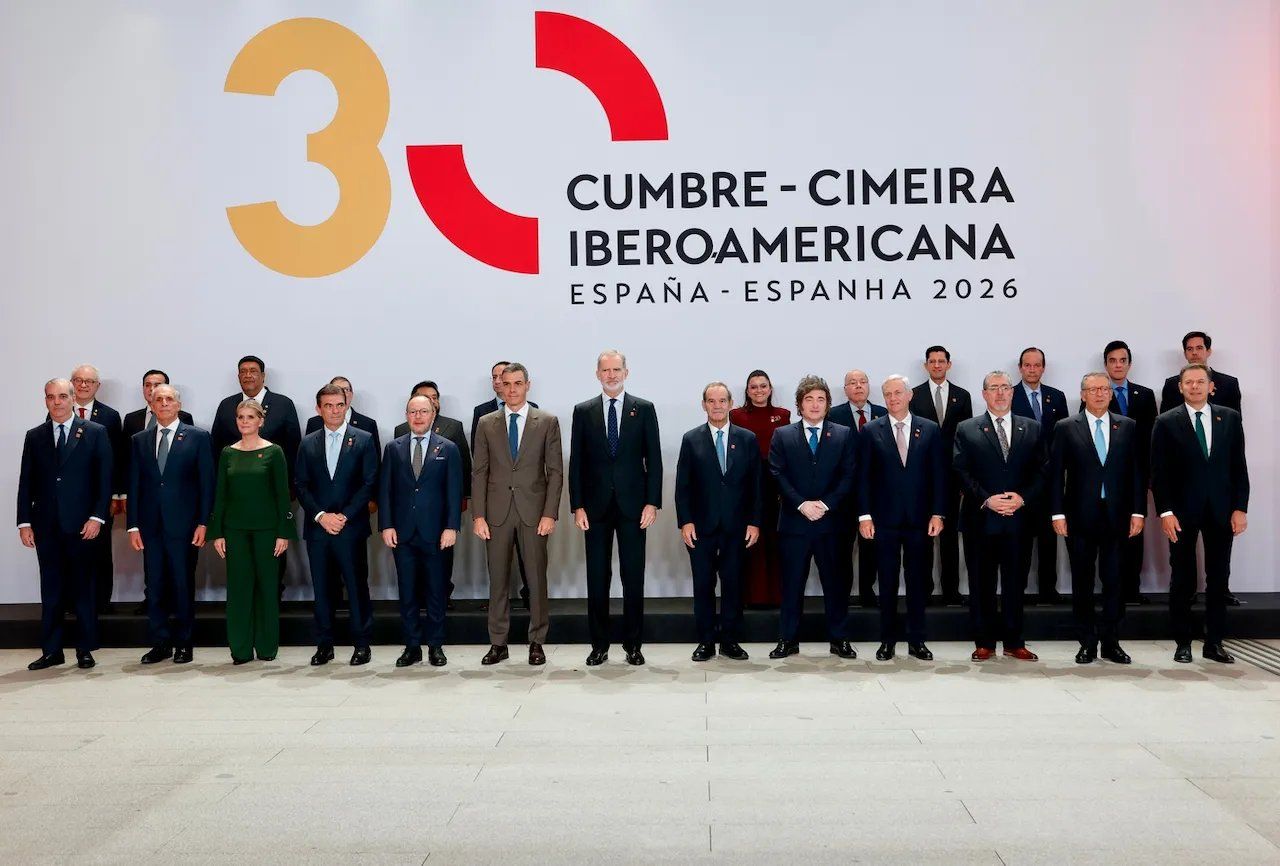
The 30th Ibero-American Summit in Madrid held a session on Thursday marked by Cuba's denunciation of the United States, El Salvador's defense of its military intervention in Haiti and the call for a Latin American to lead the United Nations.
Cuban Foreign Minister Bruno Rodríguez accused Washington of subjecting his country to «collective punishment» through economic restrictions, a policy of «economic asphyxiation» that, he said, has hardened over the past ten months to «inhumane» limits. Rodríguez thanked the countries that voted on October 28 in the UN General Assembly for a resolution against the embargo, adopted with 130 votes in favor, 17 against and 25 abstentions, a significant drop from the 165 votes in favor obtained in 2025. Argentina, Colombia, Costa Rica, Ecuador and Paraguay voted against, while Chile, Honduras and Peru abstained. Brazil, Mexico, Nicaragua and Uruguay also condemned the restrictions.
El Salvador's Vice President, Félix Ulloa, defended the legitimacy of his country's military presence in Haiti and denied that it amounts to an occupation. According to his account, the intervention responds to a bilateral agreement with the Haitian authorities and seeks to rescue four Salvadoran citizens who disappeared after an armed group ambush on October 18 in Croix-des-Bouquets, near Port-au-Prince. The government of Nayib Bukele deployed more than 2,000 troops, with armored vehicles and air assets. Ulloa said the four missing men were technical assistants, not combatants, although Doctors Without Borders has warned of rising violence in the country.
Another prominent issue was the succession of António Guterres as head of the UN: several leaders argued that the next Secretary-General should come from Latin America and the Caribbean. Costa Rican President Laura Fernández backed the candidacy of Costa Rica's Rebeca Grynspan, a former Ibero-American secretary-general and head of UNCTAD, and Guatemalan President Bernardo Arévalo said the region has a historic opportunity to take on that leadership.
The summit, whose plenary session was chaired by King Felipe VI and attended by ten heads of state and government, closed with consensus among all 22 countries on the final declaration, according to Spanish Foreign Minister José Manuel Albares. Among the agreements are the Ibero-American Artificial Intelligence Alliance, a cooperation network against natural disasters, the Academic Mobility Charter and agreements on care policies.
Photo: El Folio
Source: El Folio